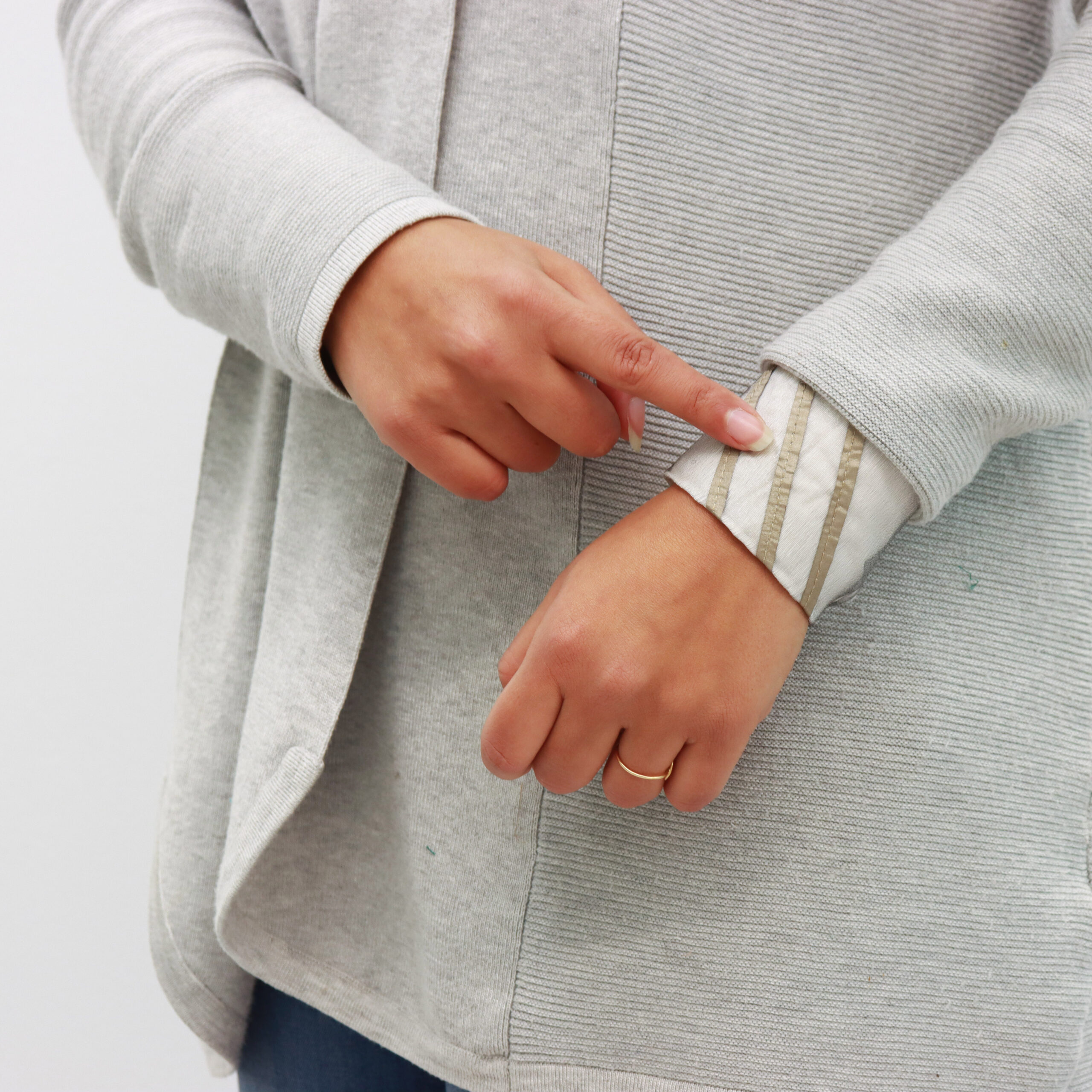
To experiment with the augmentation of sensors, we designed the SlideSense Cardigan with a machine-sewn slide sensor
(S1) embedded in the sleeve cuff. Made with conductive fabric and sewn with conductive thread, the sensor connects to a
microcontroller (T4), enabling gesture-based controls. The discreet placement ensures it blends seamlessly into the cardigan’s design
without compromising style. The slide sensor has potential applications such as adjusting
music volume, scrolling through presentation slides, or controlling smartphone interactions with a simple swipe.
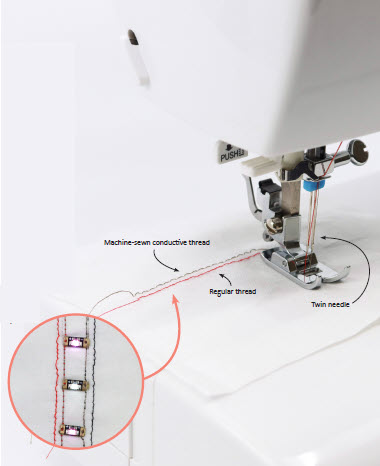
Through our exploration of e-sewing, we aimed to expand the design space for sewing as a hybrid craft using domestic sewing machines. The techniques we developed address challenges in e-textile construction, such as ensuring reliable connections and building modular circuits for improved durability and adaptability of wearable garments. Previous work in HCI primarily used sewing machines as supplementary tools within larger fabrication workflows [16, 19, 63]. Our work positions these machines as stand-alone tools for designing and constructing e-textile circuits from start to finish. This approach defines a novel design space for domestic sewing machines as integral tools in e-textile fabrication. By focusing solely on machine-sewn techniques, we uncover new possibilities for crafting high-fidelity, functional artifacts without relying on additional tools such as embroidery machines or other digital fabrication technologies, which tend to be more costly for DIY-ers and makers.