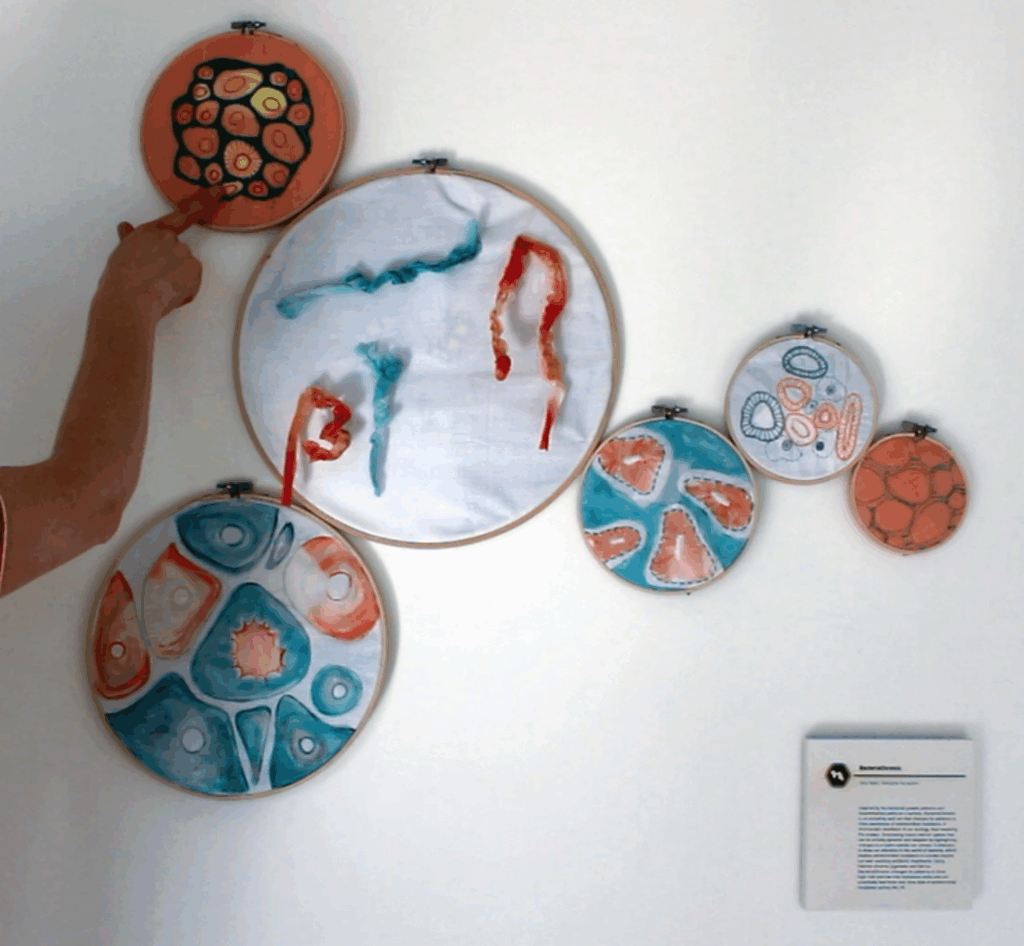
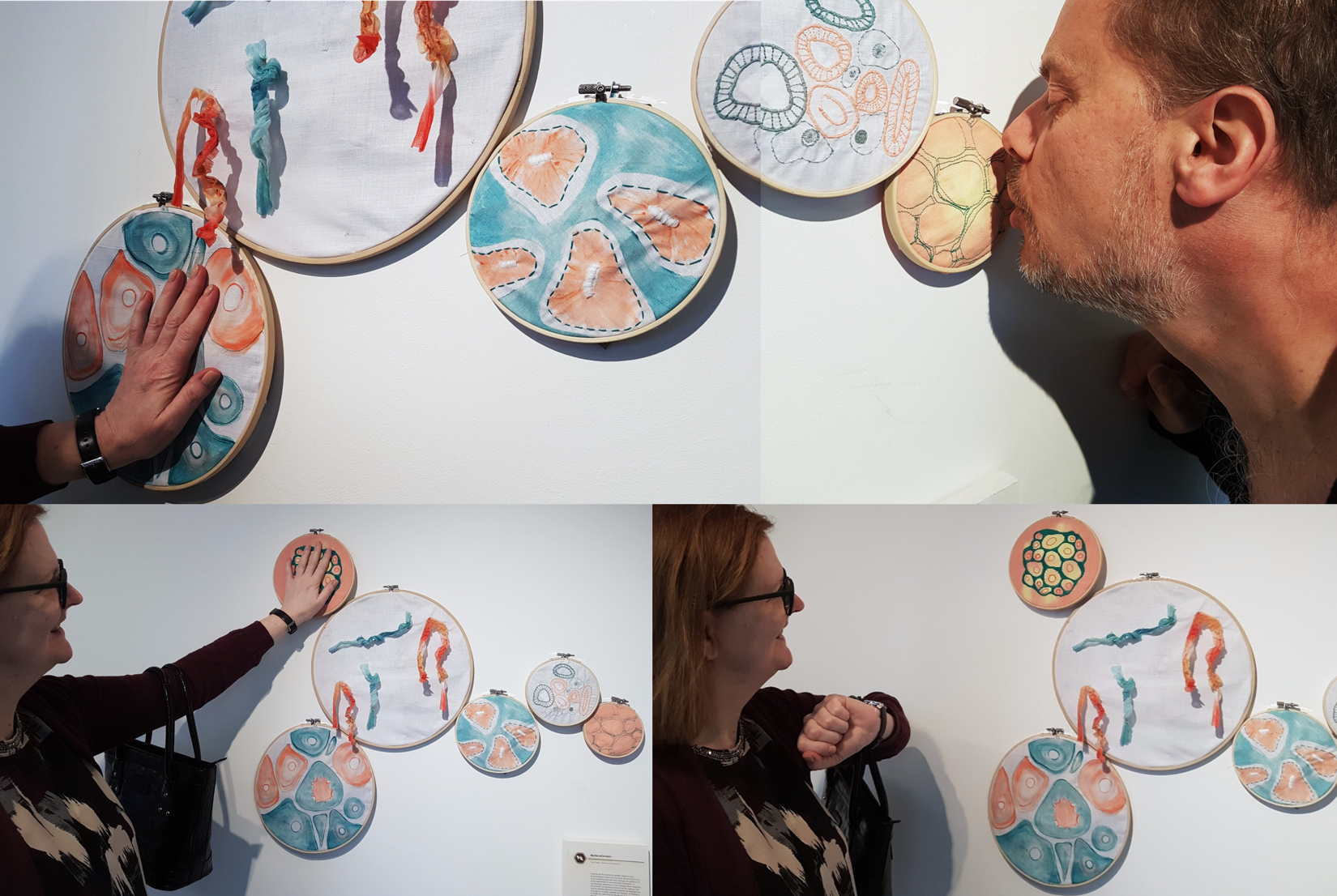
Over 6 weeks, BacterioChromic was installed as part of the LWAA 2018 Exhibition at the Lakeside Arts gallery in Nottingham, UK. Around 1285 members of the public were reported to have visited the exhibition during this period. The lead author was present for some of these days and took field notes, made video recordings, observed visitors’ interactions, and spoke to visitors about their experiences. Through their questions, comments and reflections, visitors gave us insights into designing similar artefacts. This engagement gave us a better understanding of the potentials and limitations of the crafting techniques we had deployed. Further, we audio recorded informal interviews with 6 visitors who were happy to discuss our research further. The exhibition was visited by a diverse audience (age, gender, background, family groups, individuals) which provided a wider perspective on the engagement with our artefact than inviting participants to a lab setting. Inside the gallery, BacterioChromic was placed beside other actuating interior artefacts, but those which rely on mechanical actuation i.e. using rotating servo- motors. This gave visitors useful context on differing forms of actuated interior spaces.
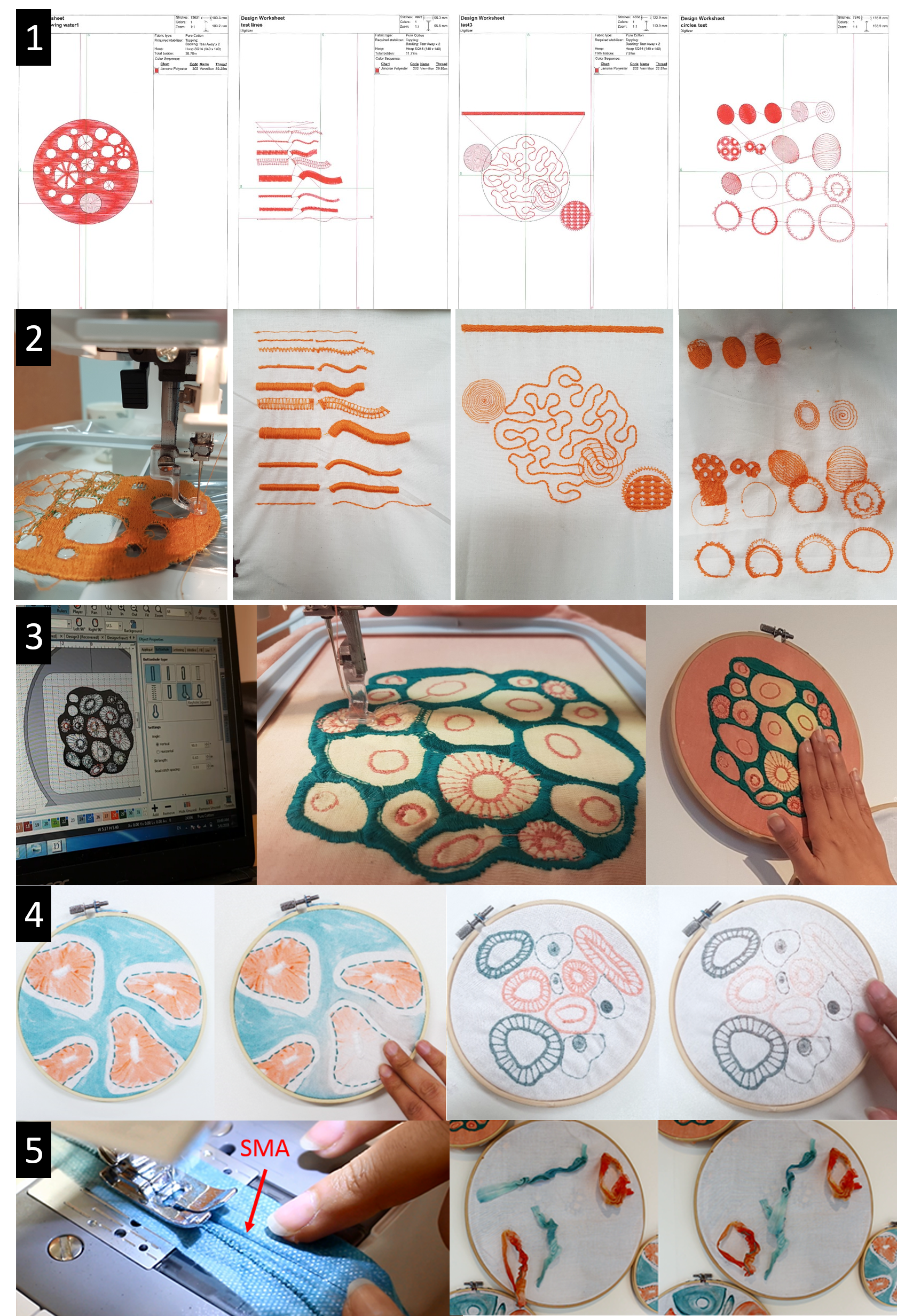
The crafted nature and making of the BacterioChromic was a conversation topic among some visitors. Most were surprised by how the fabric itself changed its shape or colour. Yet the behaviour of different elements of the piece presented new possibilities to them, away from mainstream product design. A designer who visited the gallery reflected on how she realized that the actuation was stitched into the fabric itself, and that this made it -unlike any other interactive object- “move naturally, depending on where and how you touch it”. This reflects the quality of crafting methods as techniques for embedding actuation in soft artefacts as opposed to the previous work on shape-changing interfaces. Other visitors suggested other soft artefacts that could be weaved with actuation like BacterioChromic, including garments, cushions and gorilla knitting in public spaces. Some compared it verbally to IKEA products to point out the apparent differences between its crafted individualised and bespoke quality versus “mass production and mass design” (V6). All these examples emphasize the value of craftness when designing interactive actuating artefacts.